Historical research edition: July 30, 2026. Prepared retrospectively using information available through July 29, 2026. Financial scenarios are hypothetical unless identified as historical policy or market observations.
The Federal Reserve maintained its federal funds target range at 3.50% to 3.75% on July 29, 2026.
Although the central bank left its immediate policy setting unchanged, the decision revealed notable disagreement within the Federal Open Market Committee.
Three voting policymakers preferred an increase of 25 basis points.
This was significant because the dissent reflected a preference for additional monetary restraint rather than immediate easing.
The meeting occurred amid persistent inflation concerns, considerable uncertainty surrounding energy markets and continuing economic expansion.
For financial markets, the policy decision illustrated the importance of separating the current interest rate setting from expectations about the future direction of monetary policy.
Key Findings
Federal Reserve July 2026 Research Highlights
- The federal funds target range remained at 3.50% to 3.75%.
- The decision was approved by nine votes to three.
- Beth Hammack, Neel Kashkari and Lorie Logan favored a 25 basis point increase.
- Inflation remained above the Federal Reserve's 2% objective.
- The Committee continued its ample reserves policy.
- Short and long maturity Treasury yields responded differently following the decision.
- The dissent did not establish a guaranteed future interest rate increase.
July 29 FOMC Decision
| Policy measurement | July decision |
|---|---|
| Federal funds target range | 3.50% to 3.75% |
| Target range midpoint | 3.625% |
| Change in target range | None |
| Votes supporting decision | 9 |
| Dissenting votes | 3 |
| Alternative preferred by dissenters | Increase of 25 basis points |
| Reserve policy | Continued ample reserves |
Source: Federal Reserve FOMC statement, July 29, 2026.
The three dissenting policymakers favored raising both boundaries of the target range.
Had that alternative been adopted, the range would have become 3.75% to 4.00%.
That increase did not occur at the July meeting.
The hypothetical alternative must therefore be distinguished from the actual policy decision.
Understanding the Federal Funds Rate
The federal funds rate concerns overnight borrowing of reserve balances between eligible financial institutions.
The Federal Reserve establishes a target range rather than directly setting every interest rate throughout the economy.
It implements monetary policy through administered rates and operations that influence money market conditions.
The target midpoint is an analytical reference, not a universal borrowing rate available to households or companies.
| Interest rate category | Primary economic role |
|---|---|
| Federal funds rate | Overnight reserve market financing |
| Treasury bill yields | Short maturity government financing |
| Treasury note yields | Intermediate government borrowing |
| Corporate bond yields | Business debt financing |
| Mortgage rates | Residential property financing |
| Credit card rates | Consumer revolving credit |
These rates respond to related but distinct economic influences.
Why the Three Dissenting Votes Matter
A dissent indicates that a voting policymaker disagrees with the approved decision.
Its economic significance depends partly on the preferred alternative.
At the July meeting, the dissenters favored additional tightening.
This provided evidence that some policymakers considered the prevailing level of restraint insufficient.
However, the voting outcome should not be converted directly into a probability of a subsequent rate increase.
The Committee's membership, economic information and individual assessments can change between meetings.
Dissent provides insight into the range of policy views rather than a reliable prediction of the next decision.
The Federal Reserve's Dual Mandate
The Federal Reserve conducts monetary policy in pursuit of maximum employment and stable prices.
These objectives can create difficult tradeoffs when inflation rises while economic conditions weaken.
A conventional demand driven inflation episode may respond to higher financing costs through reduced borrowing and spending.
A supply driven inflation episode can be more complicated because the original pressure arises from constrained production or distribution.
Higher interest rates cannot directly produce additional energy supplies.
They can nevertheless influence the extent to which the initial price shock spreads into broader demand, wages and inflation expectations.
Economic Activity and Inflation
The July statement characterized economic activity as continuing to expand, with strong investment and productivity conditions.
Inflation nevertheless remained above the central bank's objective.
The Committee identified supply related pressures, including energy costs, as contributing factors.
An important consideration was whether those price increases would remain temporary or generate persistent inflation beyond their initial categories.
For investors, the combination of continued economic activity and elevated inflation challenged assumptions that monetary policy would necessarily move toward immediate easing.
June Inflation Data Available at the Meeting
The Bureau of Labor Statistics published its June consumer inflation report on July 14.
| Inflation measurement | Reported observation |
|---|---|
| June headline annual CPI inflation | 3.5% |
| May headline annual CPI inflation | 4.2% |
| June headline monthly CPI change | -0.4% |
| June annual core CPI inflation | 2.6% |
Source: BLS CPI release, July 14, 2026.
The decline in the annual headline rate indicated some easing in measured consumer inflation.
Nevertheless, the price level remained higher than a year earlier.
A negative monthly headline observation does not necessarily mean sustained deflation has begun.
The Federal Reserve also places particular emphasis on personal consumption expenditures inflation when assessing progress toward its objective.
CPI and PCE are related but distinct statistical measures.
For additional context, see our inflation measurement research.
Nominal and Real Interest Rates
A nominal policy rate does not fully describe the economic restrictiveness of monetary policy.
The relevant real interest rate depends on inflation expectations over an appropriate horizon.
Consider the July target midpoint of 3.625%.
| Hypothetical expected inflation | Approximate real policy rate |
|---|---|
| 2.0% | 1.59% |
| 2.5% | 1.10% |
| 3.0% | 0.61% |
| 3.5% | 0.12% |
| 4.0% | -0.36% |
The figures use the multiplicative nominal and inflation return relationship.
They are sensitivity calculations rather than measurements of actual market inflation expectations.
An unchanged nominal interest rate can become more restrictive if expected inflation declines.
Conversely, rising expected inflation can reduce the real degree of restraint.
Monetary Policy Transmission to Bond Markets
Treasury yields respond to expectations about future policy and broader financial conditions.
Shorter maturity yields tend to be particularly sensitive to expected policy over their relevant horizons.
Longer maturity yields also incorporate expected inflation, economic activity and compensation for holding duration risk.
This can produce different movements across the yield curve following a single policy announcement.
Reuters reported that the two year Treasury yield declined following the July decision while the ten year yield increased.
The official Treasury par yield observations for July 29 provided the following reference points.
| Treasury maturity | July 29 yield |
|---|---|
| Two years | 4.22% |
| Five years | 4.37% |
| Ten years | 4.67% |
| Thirty years | 5.20% |
Source: US Treasury daily par yield curve rates.
Treasury's standardized observations should not be treated as identical to every intraday trading quote.
The Shape of the Treasury Yield Curve
The July 29 ten year yield exceeded the two year yield by 45 basis points.
The thirty year yield exceeded the ten year yield by 53 basis points.
| Yield comparison | July 29 spread |
|---|---|
| Ten years minus two years | 45 basis points |
| Thirty years minus ten years | 53 basis points |
A positive slope does not independently establish strong economic growth.
The curve reflects several influences, including expected future rates, inflation compensation, government debt supply and term premiums.
Researchers should avoid assigning a single economic interpretation to the curve without examining its underlying drivers.
The Role of Term Premiums
The term premium describes additional compensation investors may require for holding longer maturity bonds rather than repeatedly investing in shorter maturity instruments.
It cannot be observed directly in the same manner as a quoted bond yield.
Researchers estimate it using different financial models.
A longer maturity yield can rise even when expected future short term rates decline if the estimated compensation for duration risk increases sufficiently.
This helps explain why longer maturity borrowing costs may behave differently from immediate central bank policy settings.
Bond Price Sensitivity
Fixed income prices generally decline when their required yields increase.
Consider a hypothetical bond portfolio with a modified duration of eight years.
| Yield change | Approximate price effect |
|---|---|
| Decrease of 50 basis points | +4.0% |
| Decrease of 25 basis points | +2.0% |
| Increase of 25 basis points | -2.0% |
| Increase of 50 basis points | -4.0% |
| Increase of 100 basis points | -8.0% |
The calculation is a first order duration estimate.
Actual results also depend on convexity, credit spreads, coupon income and changes across different maturities.
Investors holding longer maturity bonds should therefore consider market yield sensitivity separately from the current federal funds rate.
Corporate Borrowing and Interest Expense
Businesses experience monetary policy through the financing arrangements relevant to their operations.
A company with floating rate debt may experience relatively rapid changes in interest expenses.
A company with long maturity fixed rate debt may retain its existing interest cost until refinancing becomes necessary.
Consider a hypothetical business with $10 million of floating rate borrowing.
| Effective borrowing rate | Annual interest expense |
|---|---|
| 4.00% | $400,000 |
| 4.25% | $425,000 |
| 4.50% | $450,000 |
| 5.00% | $500,000 |
| 6.00% | $600,000 |
An effective rate increase of 25 basis points would add $25,000 to annual interest expenses under unchanged principal.
The July decision did not itself implement the dissenters' preferred increase.
The actual borrowing cost depends on the company's contractual benchmark, credit spread and financing structure.
Refinancing and Debt Maturity
Interest rate exposure can remain temporarily hidden when a business has substantial fixed rate debt.
Consider a company with $100 million in outstanding bonds paying a 3% coupon.
Its annual interest expense is $3 million.
If the entire debt were refinanced at 6%, annual interest expense would become $6 million.
| Financing measurement | Existing debt | Hypothetical refinancing |
|---|---|---|
| Outstanding principal | $100M | $100M |
| Effective interest rate | 3% | 6% |
| Annual interest expense | $3M | $6M |
The increase occurs because of refinancing rather than an immediate adjustment to the original fixed rate debt.
Debt maturity schedules are therefore essential when assessing the effect of prolonged elevated borrowing costs on corporate earnings.
Credit Spreads and Financial Conditions
Corporate borrowing costs reflect both benchmark government yields and compensation for company specific financial risks.
Consider two hypothetical companies issuing debt when the relevant government benchmark yields 4%.
| Borrower | Credit spread | Indicative borrowing yield |
|---|---|---|
| Company A | 1.0% | 5.0% |
| Company B | 3.5% | 7.5% |
Even with identical benchmark rates, financing costs differ substantially.
A deterioration in corporate credit quality can increase borrowing expenses without any change in the federal funds target range.
For further context, see our credit spread research.
Housing Market Transmission
Residential mortgage rates generally reflect longer maturity financing conditions and borrower specific characteristics.
Consequently, they can change even when the Federal Reserve leaves its immediate policy setting unchanged.
Consider a hypothetical $400,000 mortgage with a 30 year term.
| Annual mortgage rate | Approximate monthly principal and interest |
|---|---|
| 5.0% | $2,147 |
| 6.0% | $2,398 |
| 7.0% | $2,661 |
| 8.0% | $2,935 |
The example excludes taxes, insurance and financing fees.
An increase from 5% to 7% raises the monthly payment by approximately $514.
Such changes can influence affordability, housing demand and related economic activity.
However, existing fixed rate borrowers may experience no immediate payment adjustment.
Equity Valuations and Discount Rates
Equity values depend on expected future cash generation and the required return used to discount those cash flows.
Long duration growth businesses can be particularly sensitive to changes in valuation assumptions because a substantial portion of their estimated value may depend on distant future earnings.
Consider a fictional company expected to generate $100 million of cash flow ten years from now.
| Assumed discount rate | Present value |
|---|---|
| 5% | $61.39M |
| 7% | $50.83M |
| 9% | $42.24M |
| 11% | $35.22M |
These are simplified discounted cash flow calculations.
Higher required returns reduce the present value of unchanged future cash flows.
However, changes in expected business profitability can offset or amplify the effect.
An interest rate increase does not automatically imply a particular equity market return.
US Dollar Implications
The dollar can respond to changing expectations about US monetary policy relative to other economies.
Higher expected US rates may support dollar denominated investments under some conditions.
Nevertheless, foreign exchange markets also incorporate economic growth, trade conditions, international capital flows and uncertainty.
A stronger dollar can increase the local currency cost of internationally priced commodities for foreign buyers.
It can also affect the translated earnings of US multinational companies.
For additional context, see our US dollar index research.
Cryptocurrency and Monetary Policy
Cryptocurrency markets may respond to changes in interest rates, liquidity and investor risk preferences.
Higher available yields on relatively low risk financial instruments can influence the opportunity cost of holding speculative assets.
However, cryptocurrency valuations also respond to network developments, investment product flows, leverage and market structure.
A central bank decision cannot independently explain every digital asset price movement.
Bitcoin or Ethereum can appreciate during restrictive policy conditions or decline while policy becomes less restrictive.
Researchers should distinguish macroeconomic relationships from asset specific developments.
The Ample Reserves Framework
The July FOMC statement confirmed continuation of its ample reserves policy.
This operational framework concerns the availability of reserve balances within the banking system and the implementation of monetary policy.
Bank reserves should not be confused with household cash deposits or government spending.
Changes in the central bank balance sheet also do not translate mechanically into equivalent changes in equity or cryptocurrency prices.
Money market conditions depend on the distribution of reserves, institutional demand for liquidity and other financial arrangements.
See our Federal Reserve balance sheet research for a more detailed discussion.
Three Possible Policy Scenarios
| Scenario | Economic conditions | Possible policy implications |
|---|---|---|
| Inflation continues easing | More moderate price pressures | Potential reduction in monetary restraint |
| Inflation remains persistent | Continued demand and supply pressures | Extended period of elevated rates |
| Inflation accelerates again | Renewed supply shocks or broader price growth | Potential additional tightening |
These scenarios are not forecasts of subsequent FOMC decisions.
Their relevance depends on actual economic information available after the research cutoff.
Practical Federal Reserve Research Framework
Research Consideration
The July decision maintained the policy range, while the dissent revealed disagreement about the appropriate degree of restraint. Neither the decision nor the dissent independently establishes the next policy action.
| Research indicator | Analytical purpose |
|---|---|
| Federal funds target | Current policy setting |
| FOMC voting record | Distribution of policy preferences |
| PCE inflation | Preferred inflation measurement |
| CPI inflation | Additional consumer price context |
| Employment growth | Labour market conditions |
| Wage growth | Potential domestic cost pressures |
| Treasury yields | Market financing expectations |
| Credit spreads | Private sector financial risk |
| Bank lending conditions | Monetary transmission |
| Reserve balances | Operational liquidity context |
| Corporate earnings | Real economy profitability |
Conclusion
The July 29 Federal Reserve decision maintained the target range at 3.50% to 3.75% while revealing disagreement among voting policymakers.
Three participants preferred an increase of 25 basis points, demonstrating that additional tightening remained part of the policy discussion.
Persistent inflation, energy uncertainty and continued economic activity complicated the assessment of the appropriate monetary stance.
For investors, the decision's significance extended across government bonds, corporate financing, mortgage markets, equity valuations and exchange rates.
A disciplined interpretation distinguishes the actual policy decision from market expectations and hypothetical future scenarios.
Frequently Asked Questions
Did the Federal Reserve raise interest rates on July 29?
No. The target range remained at 3.50% to 3.75%.
How many policymakers dissented?
Three voting policymakers opposed the approved decision.
What alternative did they prefer?
They favored increasing the target range by 25 basis points.
What was the midpoint of the maintained range?
The midpoint was 3.625%.
Can Treasury yields rise when the Fed holds rates?
Yes. Expected future policy, inflation and term premiums can influence yields.
Does the federal funds rate directly determine mortgage rates?
No. Mortgage rates also depend on longer maturity financing conditions and borrower characteristics.
Does the dissent guarantee a future increase?
No. Future decisions depend on subsequent information and committee assessments.
Research Sources
- Federal Reserve FOMC Statement, July 29, 2026
- US Treasury Daily Par Yield Curve Rates, July 2026
- Bureau of Labor Statistics June CPI Release, July 14, 2026
- Federal Reserve Monetary Policy
Risk Disclosure
This article is provided exclusively for educational and informational purposes. It does not constitute personalized investment advice.
Historical policy settings and market observations are distinguished from hypothetical financing and valuation scenarios.
Interest rate expectations can change rapidly. Bonds, equities, currencies and cryptocurrencies may experience significant volatility and permanent financial losses.
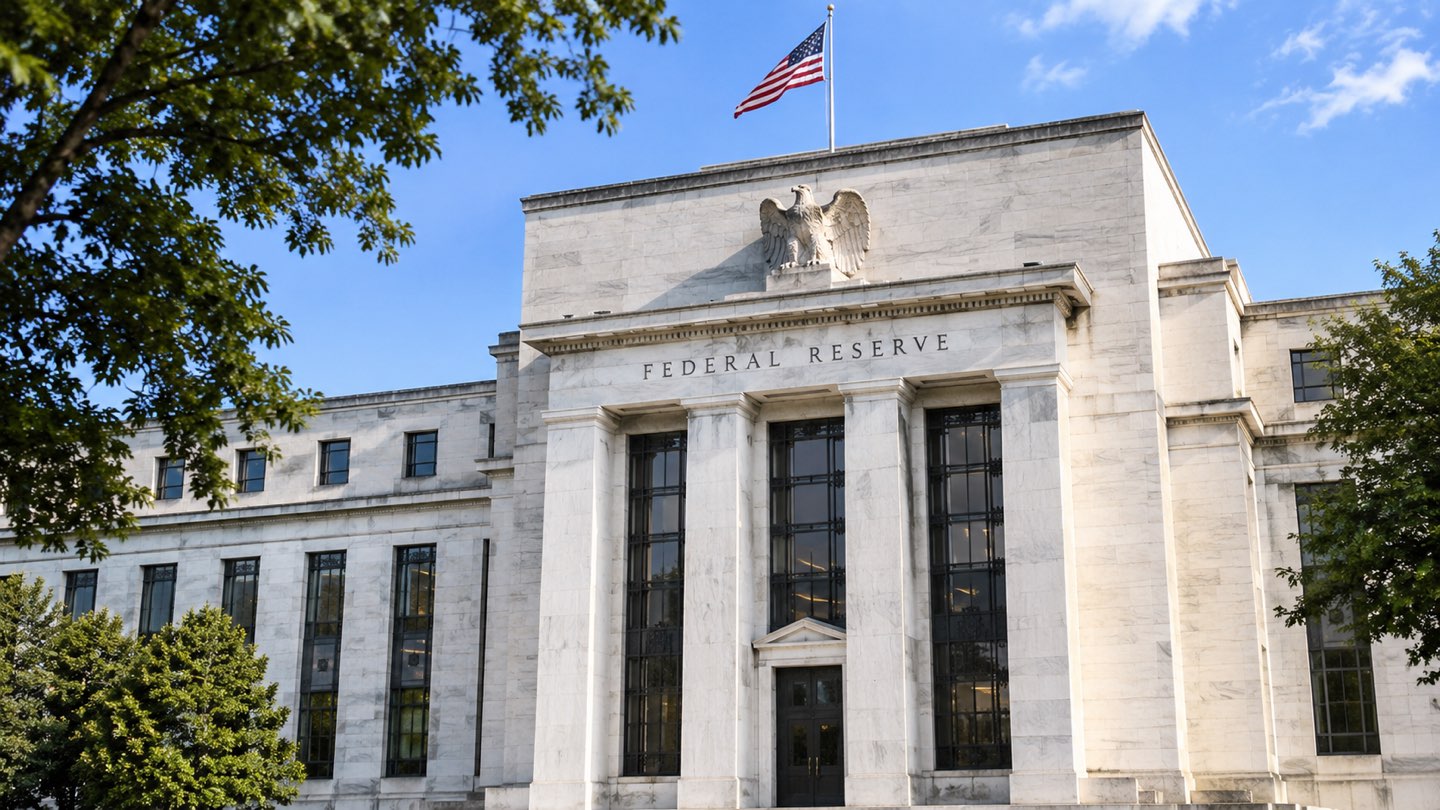
The cover image is illustrative and does not represent documentary photography of the July FOMC meeting.